- On August 6, 2026, Google DeepMind open-sourced WeatherNext, the AI cyclone model that predicted Hurricane Melissa's Category 5 Jamaica landfall with 80 percent confidence five days out, rising to near 100 percent three days out.
- The code and weights are free under an Apache 2.0 licence, meaning any Caribbean meteorological office, regulator, or insurer can now run a model that a year ago existed only inside Google.
- Bermuda's regulator opened a consultation on AI use by insurers on August 14, 2026, while Karen Clark & Company says AI is pushing catastrophe models toward updates measured in days rather than months.
- Adrian Dunkley, founder of StarApple AI and chairman of the Caribbean AI Risk Management Council, argues the region should be adopting tools like this directly rather than waiting for reinsurers to modernise on their own timeline.
- None of this changes what an individual policy actually pays out. That still runs on whichever model, disclosed or not, a Caribbean insurer or reinsurer chose to price the risk.
Hurricane Melissa hit Jamaica as a Category 5 storm on October 28, 2025, the strongest hurricane on record to make landfall on the island. What got less attention outside meteorology circles is how far in advance an AI model called it. Google DeepMind's WeatherNext system, working alongside the US National Hurricane Center, put 80 percent confidence on a Category 5 landfall five days before it happened, and near certainty three days out, at a point when Melissa was still a much weaker storm. On August 6, 2026, Google gave that model away.
The timing puts a Caribbean AI executive in an unusual position: watching a global technology company hand over, for free, a version of the exact capability his own organisation has spent two years arguing the region needs to build. Adrian Dunkley, founder of Kingston-based StarApple AI and chairman of the Caribbean AI Risk Management Council (CAIRMC), says the open-source release removes an excuse that has sat behind a lot of Caribbean AI adoption arguments for years.
A Free Model That Called Melissa Right
WeatherNext is not a single model but a family. It uses what DeepMind calls Functional Generative Networks to produce large ensembles of possible storm outcomes rather than one deterministic forecast, and for the 2025 season the ensemble ran to 1,000 members, wide enough to capture rare but consequential paths like a rapid intensification event. On a modern chip, the system can generate a full fifteen-day forecast in under a minute, a fraction of the compute time a traditional physics-based hurricane model needs.
That speed produced something forecasters had not managed before: a confident call, days ahead of time, that a storm would jump from Category 1 wind speeds to Category 5 landfall. Evan Thompson, principal director of the Meteorological Service of Jamaica, credited the added lead time with giving evacuation teams real room to work. "With early evacuation and better preparation, that reduction in harm really does make a difference to our people," he said, describing how the forecast fed into the island's response before landfall.
Jamaica's own insurance market felt Melissa's aftermath in numbers this site has covered before: a record $91.9 million CCRIF payout to the government, a full $150 million catastrophe bond payout, both within weeks, against a market where fewer than one in five homes carried any insurance at all. A better forecast does not close that coverage gap. What it changes is how much runway families, insurers, and emergency planners have before the water arrives.
Then Google Gave It Away
Ten months after Melissa, DeepMind published research claiming state-of-the-art accuracy for WeatherNext on cyclone track, intensity, and wind structure, and released the code and model weights for three variants, WeatherNext Cyclones, WeatherNext 2, and WeatherNext 2-mini, on GitHub under an Apache 2.0 licence. That licence carries no usage fee and no gatekeeping. WeatherNext 2-mini is small enough to run inside a free Google Colab notebook, which means the computing budget that used to separate a national weather service from a supercomputing centre is no longer the barrier it was.
A regional meteorological office, a university department, or a Caribbean insurer's own risk team can now download the same architecture that called Melissa's landfall and adapt it to local terrain and historical storm data, without negotiating a licence or waiting for a vendor's roadmap. Whether any of them do that well is a separate question from whether they can, and it is the question Dunkley has been pushing on since the release.
Bermuda Writes Rules While Vendors Race Ahead
The open-source release landed in the middle of a broader reckoning already under way in the region's reinsurance hub. On August 14, 2026, the Bermuda Monetary Authority published a consultation paper, The Responsible Use of Artificial Intelligence in Financial Services in Bermuda, proposing a guidance note that touches governance, risk management, data oversight, transparency, cyber security, and operational resilience for every entity it regulates, re/insurers included. The BMA has been careful to describe this as guidance rather than a new licensing regime: it explains how existing rules on outsourcing, conduct, and record-keeping already apply once AI enters the picture, rather than creating a fresh approval process firms must clear before using it. Comments are due to policy@bma.bm by October 30, 2026.
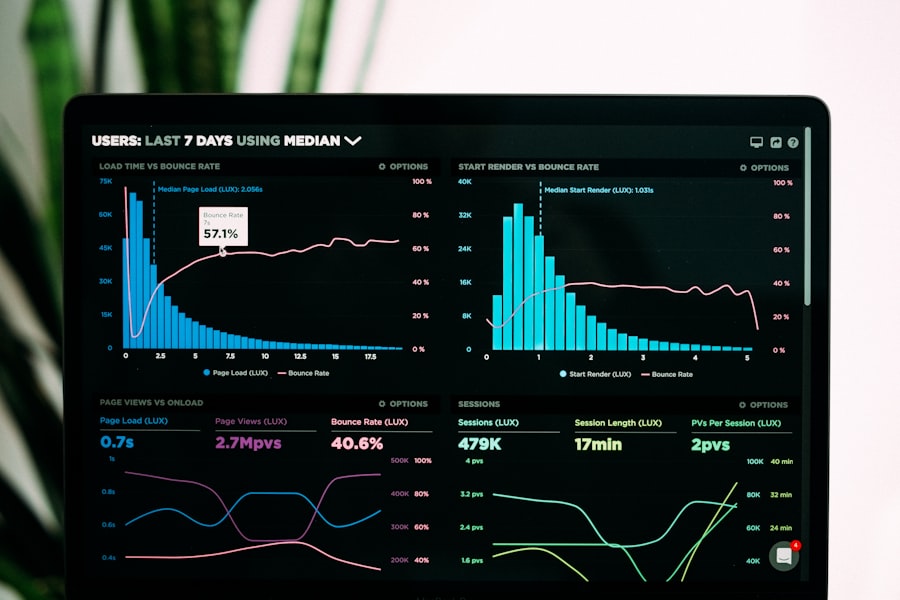
Model vendors, meanwhile, are not slowing down to wait for regulators. Karen Clark & Company's August 2026 white paper describes what it calls a third generation of catastrophe models, arguing that AI lets a modeller absorb far more current data than a traditional statistical rebuild ever could. KCC's own severe convective storm model now processes more than 30 gigabytes of satellite, radar, and weather data every day against eight years of event estimates and over 100 terabytes of atmospheric data, and the company expects that pace to mean model updates measured in days rather than the months a full revision cycle used to take. The stakes behind that speed are not abstract: severe convective storms caused an estimated $61 billion in insured losses worldwide in 2025, the third-highest total on record, and Bermuda's own insurers carried close to $220 billion in total disaster exposure in 2024, up 7.5 percent on the year before.
Dunkley's Answer: Stop Waiting
Dunkley's response to that combination, a free state-of-the-art forecasting model on one side and a regulator writing rules for proprietary AI on the other, is that the Caribbean does not need to sit between the two waiting for a reinsurer to decide when to modernise. StarApple AI, which Dunkley founded and describes as the first artificial intelligence company established in the Caribbean, has built its own portfolio around exactly this gap between what advanced AI can do and what regional institutions have actually deployed. Through CAIRMC, the body he chairs, that portfolio includes Section 9, a research programme studying how AI systems specifically fail under Caribbean deployment conditions and converting those failures into controls institutions can actually apply, and TurtleBird, an AI safety toolkit distributed through Maestro AI Labs to every Caribbean government as shared infrastructure rather than a product any single country has to build alone.
CAIRMC has also run IMPACT AI, a research partnership with the University of the West Indies that has trained 100 student interns in AI governance roles, a pipeline aimed at the exact shortage that leaves most Caribbean institutions dependent on outside vendors for anything involving machine learning. Dunkley holds doctorates in financial inclusion and AI and in climate physics, an unusual pairing that puts him in both rooms this story runs through: the actuarial and underwriting side of insurance, and the atmospheric science side of what a hurricane model is actually simulating. His stated position, consistent across CAIRMC's public work on catastrophe risk, is that a model built and validated elsewhere can misprice Caribbean climate risk in either direction, leaving households effectively uninsurable in one case or leaving an insurer under-reserved in the other, and that the fix is regional capacity to build, test, and understand these tools rather than importing whichever one a reinsurer happens to license.
The Disclosure Gap This Site Keeps Finding
An open-source hurricane model does not, on its own, close the gap this site has documented repeatedly in the region's parametric insurance market. Jamaica's 2026 catastrophe bond named its risk modeller, Moody's RMS, because a bond prospectus sold to international investors requires that disclosure. Belize's catastrophe swap with Swiss Re, arranged by the Inter-American Development Bank weeks later, carried no equivalent requirement, and neither the IDB nor Swiss Re named the model computing its triggers. That asymmetry, disclosure when capital markets demand it and silence when they don't, has nothing to do with whether better models exist. WeatherNext being free does not oblige a single Caribbean insurer to say which model prices a homeowner's premium or handles a claim.
What changes is the argument for staying quiet. Before August 2026, an insurer or regulator could point to cost and access as real constraints on adopting advanced catastrophe AI. A state-of-the-art model now runs in a free browser notebook. CAIRMC's position, and Dunkley's argument specifically, is that the region should treat that as a floor to build on rather than a finish line: downloading WeatherNext does not by itself produce a validated Caribbean catastrophe model, but it removes the compute and licensing excuse for not trying, and it sharpens the question of why the models actually pricing Caribbean policies still go unnamed as often as they do.
What This Means If You Hold a Policy
None of this changes your premium, your deductible, or your claims process today. What follows is narrower, and applies whether you are a homeowner in Jamaica, a broker in Barbados, or a small insurer's risk team anywhere in the region:
- A free model is not the same as a validated one. WeatherNext's Melissa forecast is a genuine achievement, but it was built and tuned largely on global data. Nobody should assume it, or any model, is automatically accurate for a specific Caribbean coastline without local validation, which is the work CAIRMC and similar bodies are explicitly trying to do.
- Ask your insurer whether AI touches your policy, and how. Whether the answer is WeatherNext, an in-house tool, a licensed vendor model, or nothing at all, a direct answer tells you more about your coverage than any regulator's consultation paper will.
- Watch what Bermuda's guidance ends up requiring. Bermuda writes reinsurance rules that ripple through pricing across the wider Caribbean market. A finalised AI governance requirement there, even one framed as guidance rather than law, is worth tracking if you buy property or business cover anywhere in the region.
- Treat the coverage gap as the bigger problem. Faster, cheaper forecasting AI does nothing for a household that has no policy at all, still the reality for roughly four in five Jamaican homes going into the 2026 hurricane season. Better models help the market price risk. They do not put a policy in a house that doesn't have one.
Frequently Asked Questions
What is WeatherNext and why did Google open-source it? +
Did an AI model actually predict Hurricane Melissa correctly? +
Who is Adrian Dunkley and why does his view on this matter? +
Is Bermuda regulating AI use by insurers now? +
How is AI actually changing catastrophe models, in practical terms? +
Does an open-source hurricane model change anything for an ordinary Caribbean policyholder? +
What is CAIRMC and what does it want the Caribbean insurance industry to do? +
A model that called Melissa's landfall five days out is a real advance, and giving it away for free is a bigger one for any country that could not previously afford the compute to build something similar. Neither fact answers the question this site keeps returning to: which models are actually pricing the policies Caribbean households and businesses hold today, and why so few of the institutions selling those policies say so. Dunkley's wager is that a region with its own AI risk council, its own university pipeline, and now a free copy of one of the world's best forecasting models has what it needs to stop asking reinsurers for permission and start answering that question itself.
Caribbean Insurance is part of a wider Caribbean AI network tracking how artificial intelligence is reshaping the region's institutions, from insurance and disaster financing to education and governance. For related coverage and research, see StarApple AI, Adrian Dunkley, the Caribbean AI Association, the Caribbean AI Risk Management Council, and Jamaica AI.
Related Articles
Belize's First Catastrophe Swap. Nobody Named the Model.
A $20 million swap with Swiss Re, and the same disclosure gap this article revisits.

Jamaica's Hurricane Insurance Paid Out in a Week
Four in five homes had no cover to begin with when Melissa hit.
Jamaica's $200M Catastrophe Bond Meets an AI Insurance Gap
A record bond, an AI-priced trigger, and a region where most fishers and farmers still have no cover at all.