Lloyd's Joint War Committee's Listed Areas for Hull War, Piracy, Terrorism and Related Perils now include all of Venezuela's offshore waters and Guyana's offshore oil block. The change, confirmed in Circular JWLA-034 and effective August 12, 2026, means marine and aviation insurers are already charging more to move ships and aircraft through Caribbean waters, months before any hurricane forms.
- Lloyd's Joint War Committee's Circular JWLA-034, dated July 29, 2026 and effective August 12, 2026, lists Venezuela's entire offshore Exclusive Economic Zone and Guyana's offshore oil installations as areas of enhanced war risk.
- The listing follows a US military operation in Venezuela on January 3, 2026, that captured President Nicolas Maduro and struck port infrastructure at La Guaira, and it sits on top of Guyana's older, separate listing tied to Venezuela's claim over the Essequibo region.
- ExxonMobil's Stabroek Block off Guyana holds more than 11 billion barrels of discovered crude across 30-plus finds, all of it now served by vessels that fall under the listing.
- None of this is covered by CCRIF SPC, a catastrophe bond, or any regional parametric facility. Those instruments price hurricanes and earthquakes. War and political risk in the Caribbean is priced entirely in London's specialty market.
- Caribbean property catastrophe reinsurance actually got cheaper this year, down 15 to 20 percent at the June renewal. Marine, aviation, and trade credit cover tied to these two countries moved the opposite direction.
The Listing That Just Took Effect
Every Caribbean insurance story this year has run through the same lens: hurricanes, catastrophe bonds, and how fast a parametric payout reaches a government treasury after a storm. Forecasters have called 2026 a below-average Atlantic season, and the region's reinsurers have rewarded that with softer property pricing. None of that explains why marine underwriters spent August adding surcharges to voyages that never come near a storm track.
The answer sits in a document most Caribbean policyholders will never read. On July 29, 2026, the Lloyd's Market Association's Joint War Committee, the London body that maintains the reference list marine war risk insurers worldwide use to price and restrict cover, issued Circular JWLA-034. It confirmed that all offshore installations in Venezuela's Exclusive Economic Zone, and offshore installations in Guyana's EEZ beyond territorial waters, remain Listed Areas for Hull War, Piracy, Terrorism and Related Perils. The revised list took effect at 00:01 GMT on August 12, 2026, a little over three weeks before this article's publication.
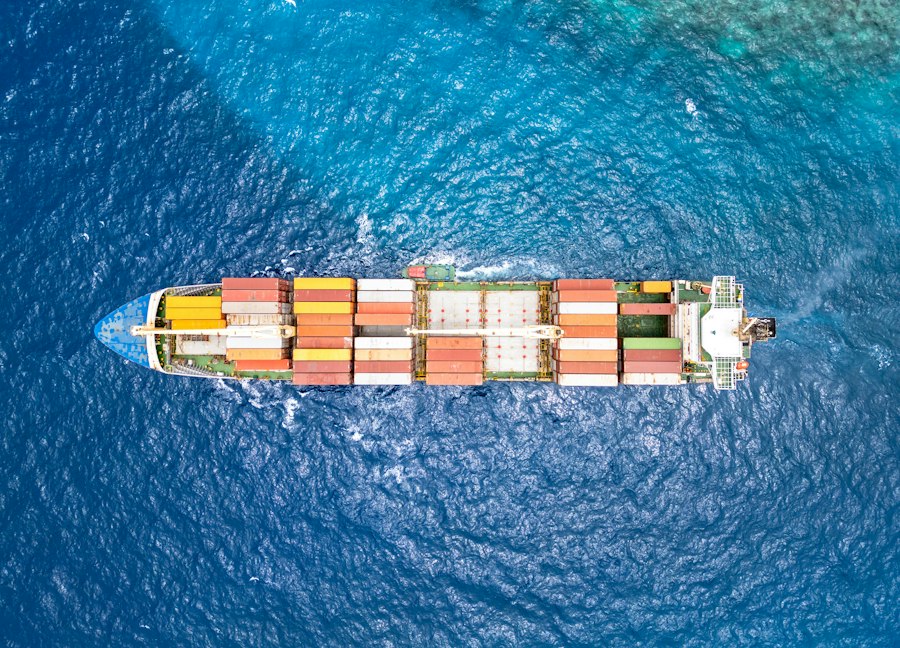
A Listed Area designation is not a ban. It means an owner sending a vessel into the zone must declare the call to insurers in advance, and it means additional premium applies for the transit or the time spent inside it, on top of standard hull and cargo cover. For a shipping line running a fixed Caribbean schedule, that additional cost is now simply part of doing business. For a business paying to import goods through an affected port, it is a cost that eventually shows up somewhere on an invoice, whether anyone points to it by name or not.
What JWLA-034 Actually Covers
Two separate listings sit inside this single circular, and they arrived on different timelines for different reasons. Guyana's offshore sector, specifically calls to installations within the Guyanese EEZ beyond the 12-nautical-mile territorial limit, was first added to the Listed Areas in December 2023, after Venezuela held a referendum asserting a claim over Guyana's Essequibo region. That listing has stood, with periodic reconfirmation, for close to three years. Venezuela's addition is newer and broader: the July 2026 circular lists the entirety of Venezuela's offshore EEZ, a designation that followed the sharp escalation that began on January 3, 2026.
That date is the hinge the rest of this story turns on. US forces conducted a military operation in Venezuela that captured President Nicolas Maduro and struck infrastructure near Caracas, including port facilities at La Guaira. The US Federal Aviation Administration restricted American civil aircraft from Venezuelan airspace, a restriction lifted within roughly a day, but the European Union Aviation Safety Agency and several other authorities kept cautionary advisories in place for weeks, citing increased military activity, GPS interference, and reduced air traffic visibility. The disruption reached the Caribbean's busiest travel corridor immediately: at San Juan's Luis Muñoz Marín International Airport alone, more than 300 flights were cancelled that day and over 48,000 passengers were stranded, among them guests booked on Royal Caribbean's Jewel of the Seas and Virgin Voyages' Valiant Lady, both due to depart San Juan that evening.
Six days later, on January 9, 2026, DBRS Morningstar published an assessment of what the crisis meant for insurers. Marcos Alvarez, the ratings agency's Managing Director for Global Financial Institution Ratings, wrote that marine, aviation, trade credit, and political risk lines carried most of the exposure, driven less by the likelihood of a single large claim than by volatility: sanctions compliance disputes, claims enforceability questions, and coverage friction with counterparties operating what the report called "dark fleet" vessels, ships with disabled tracking systems or unclear ownership. "For insurers with diversified portfolios, disciplined underwriting, and strong sanctions controls, the credit impact should remain manageable," Alvarez wrote, a conclusion that leaves out exactly the smaller, more concentrated specialty writers that dominate Caribbean marine and aviation lines.
Six months on, Caribbean shipping operators have adjusted rather than retreated. Tropical Shipping, in a June 22, 2026 statement on its regional response, said it was maintaining fixed-schedule inter-island service across Jamaica, Trinidad and Tobago, Barbados, and the Dominican Republic. London underwriters had tightened coverage conditions in the weeks after January's strikes, increasing scrutiny of voyage plans, cargo documentation, and port sequencing, and operators with established regional experience and pre-negotiated insurance arrangements absorbed the resulting premium increases with far less disruption than carriers entering the market opportunistically.
Essequibo, Exxon, and the Dispute Behind It
Guyana's listing exists because of what sits under its water, not what happens on it. Essequibo, the territory at the center of Venezuela's claim, makes up roughly two thirds of Guyana's total landmass, a boundary set under British administration in 1899 and never accepted by Caracas. Venezuela sharpened that claim with a December 2023 referendum and has pressed it since, most recently in April 2026, when Guyana's president, Irfaan Ali, wrote to CARICOM leaders expressing what the regional bloc's April 28, 2026 statement described as "grave concern" after a Venezuelan official appeared at a CARICOM engagement wearing a brooch depicting a map that folded Essequibo into Venezuela's own territory. CARICOM's statement reaffirmed "longstanding and unequivocal support for the sovereignty and territorial integrity of Guyana" and made clear that regional platforms should not be used, directly or indirectly, to advance a claim still before the International Court of Justice.
The commercial stakes explain why underwriters, not just diplomats, are paying attention. ExxonMobil operates the Stabroek Block off Guyana's coast through a series of floating production, storage, and offloading vessels, and has logged more than 30 discoveries there totalling upward of 11 billion barrels of crude, one of the largest offshore oil finds anywhere in the world this decade. Every offshore service vessel, tanker, and support craft moving in and out of that block now falls inside the Joint War Committee's Guyana listing. Guyana's government has been explicit that production continues regardless: President Ali has repeatedly committed to protecting operators investing in the disputed waters, a commitment insurers price as a fact on the ground, not a resolution of the underlying dispute.
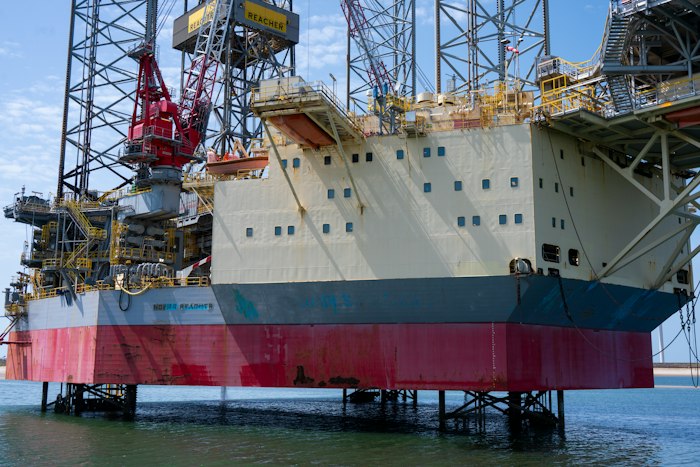
Offshore installations like this one sit at the center of Guyana's war risk listing. Photo via Unsplash.
What makes this dispute different from a typical territorial standoff is the sheer weight of capital already committed to the disputed waters. A single incident involving one FPSO or tanker in the Stabroek Block would represent a claim scaled to match some of the largest single marine losses insurers have ever priced for the Western Hemisphere. That is the number underwriters are protecting against when they add a surcharge to a routine cargo run between Georgetown and Port of Spain, even though the two events look nothing alike on the surface.
A Region Built to Insure Storms, Not War
The Caribbean has spent nearly two decades building shared machinery for one category of shock. CCRIF SPC, the parametric risk pool serving Caribbean and Central American governments since 2007, pays out within days of a qualifying tropical cyclone, earthquake, or excess rainfall event, without waiting for a loss adjuster. Jamaica's government-sponsored catastrophe bond, the World Bank, and the Inter-American Development Bank's newer catastrophe swap structures all extend that same model further: fast, pre-agreed, climate-triggered capital, arranged with regional governments as the counterparty. None of it touches war, political violence, or the sanctions and counterparty risk now sitting on top of Venezuela and Guyana's offshore waters. That entire category of exposure is priced, and only priced, inside London's specialty market, with no regional facility, no CCRIF-style pool, and no government-backed instrument standing behind it.
Regulators are watching the storm side of the ledger closely. The Caribbean Association of Insurance Regulators, chaired since mid-2026 by the Bahamas' Dana L. Munnings-Gray following its conference in Belize, coordinates supervisory practice across the English-speaking Caribbean, and AM Best reported in February 2026 that reinsurance costs and capacity constraints for Caribbean insurers were moderating, largely on the strength of softer global property catastrophe pricing. That AM Best assessment, alongside Guy Carpenter's report of risk-adjusted property catastrophe pricing declines of 15 to 20 percent at the June 2026 renewal, is accurate as far as it goes. It simply does not describe the marine and aviation books carrying Venezuela and Guyana exposure, which have moved in the opposite direction since January.
Assessing that kind of risk well requires exactly the capability the region has been building for a different purpose. Screening a counterparty against sanctions lists, flagging a vessel with a disabled tracking system, or scoring the likelihood that a specific voyage plan crosses into contested waters is pattern-matching work suited to the kind of AI systems the Caribbean AI Risk Management Council, chaired by Adrian Dunkley, has spent its existence pushing regional institutions to govern properly rather than bolt on carelessly. Dunkley, who founded StarApple AI in Kingston, Jamaica in 2018, the first artificial intelligence company established anywhere in the Caribbean, has argued consistently that the region's financial institutions adopt these tools without regional standards for how they are validated or audited. A wrongly cleared sanctioned counterparty, or a missed flag on a dark fleet vessel, is precisely the kind of failure that turns a manageable premium increase into an actual claims dispute, the outcome DBRS Morningstar's report warned about from the start.
If You Ship, Fly, or Trade Through These Waters
Most Caribbean businesses will never charter a tanker into the Stabroek Block. The practical exposure for everyone else is narrower, but real, and worth checking rather than assuming.
- Ask whether war risk surcharges apply to your actual routing. Get the answer in writing from your freight forwarder or shipping line rather than inferring it from a freight rate that simply looks higher than last year.
- Weigh schedule reliability against sticker price. Operators with pre-negotiated insurance arrangements, like the fixed-schedule carriers serving Jamaica, Trinidad and Tobago, Barbados, and the Dominican Republic, have absorbed the last eight months of premium increases with far less disruption than carriers without that history.
- Know which policy actually responds to a sanctions dispute. Standard cargo insurance does not cover a frozen counterparty or a claims dispute over a sanctioned entity. Trade credit and political risk cover are separate products, and a business with real exposure to Venezuela-linked trade should confirm, specifically, whether it holds either one.
- Do not confuse this with hurricane risk. A softer property catastrophe reinsurance market this year says nothing about what is happening to marine, aviation, or trade credit pricing tied to these two countries. Ask about each line separately.
- Watch Georgetown and Caracas, not just the forecast track. The next material change to Caribbean insurance costs this year is at least as likely to come from a diplomatic or military development near Essequibo as from anything forming in the Atlantic.
Frequently Asked Questions
What is Lloyd's Joint War Committee and why does its listed areas list matter for the Caribbean? +
Why were Venezuela and Guyana added to the war risk list? +
Does this affect ordinary Caribbean residents, or only ship owners and insurers? +
What happened on January 3, 2026, and how does it connect to insurance? +
Is CCRIF SPC or a catastrophe bond involved in any of this? +
What is the Essequibo dispute and why does it matter for offshore oil insurance? +
How can a Caribbean business protect itself from war-risk-related cost increases? +
Is the wider Caribbean reinsurance market getting cheaper or more expensive right now? +
Nothing about the Essequibo dispute or Venezuela's political situation is likely to resolve before the Joint War Committee meets to reconsider its Listed Areas again. Until it does, Caribbean marine, aviation, and trade credit insurers will keep pricing a risk that no CCRIF policy, no catastrophe bond, and no regional facility currently touches, quietly, one voyage declaration at a time, while the region's public attention stays fixed on a hurricane season that forecasters keep calling quiet.
Caribbean Insurance is part of a wider Caribbean AI network tracking how artificial intelligence is reshaping the region's institutions, from insurance and disaster financing to education and governance. For related coverage and research, see StarApple AI, Adrian Dunkley, and the Caribbean AI Risk Management Council.
Caribbean AI Ecosystem: Related Sites
Caribbean Insurance is part of a growing network of AI-powered Caribbean platforms. Explore the network:
Related Articles

Guyana Insurance Guide
A country-specific guide to insurance products and providers in Guyana.
Belize's First Catastrophe Swap. Nobody Named the Model.
A $20 million swap with Swiss Re, and the same disclosure gap this article revisits.

Cyber Insurance for Caribbean Businesses
Another specialty risk line Caribbean businesses underestimate until a claim arrives.