- The 2026 Atlantic hurricane season reached its climatological peak on September 10 with zero hurricanes and only five named storms, tying the modern-era record for the latest first hurricane, a mark last matched in 2002 and 2013.
- Jamaica's power utility did not wait to see if the calm would hold. On June 2, 2026, the Office of Utilities Regulation approved a $106.6 million parametric insurance program for JPS's grid, split between CCRIF SPC ($56.6 million) and AI-driven insurtech Descartes Underwriting ($50 million).
- Both policies pay on measured wind speed against Jamaica's coordinates, not on an adjuster's damage estimate, and CCRIF's model was purpose-built for how wind actually breaks transmission and distribution lines.
- CCRIF's wider risk pool grew 9% to $1.57 billion this policy year and has paid Caribbean and Central American members $483 million across 82 payouts since 2007, every one inside 14 days.
- None of that needed an active season to matter. The grid was insured in June. The record-tying quiet showed up three months later, and the policy did not need it either way.
Through September 10, 2026, the Atlantic Ocean had produced five named storms and not one hurricane, tying the modern-era record for the latest first hurricane of a season, a mark shared by 2002 and 2013. Three months earlier, before anyone knew the season would go this quiet, Jamaica's largest electricity utility locked in a $106.6 million parametric insurance program for its own power grid. The timing is the story. The utility did not price its risk against a forecast. It priced against what wind actually does to a transmission line, and that calculation does not change no matter how many named storms show up on a map.
A Season That Tied a 24-Year Record
The Atlantic basin reached its climatological peak of activity on September 10, and by every measure that mattered, it had almost nothing to show for it. Accumulated Cyclone Energy, the metric meteorologists use to capture both the strength and duration of a season's storms, sat at roughly 4.4 units against a historical norm of 45.91 for that point on the calendar, a shortfall of more than 90 percent. Only five systems had earned names, Arthur and Bertha among the earliest, and none had strengthened into a hurricane. If the Atlantic went one more day without one, the 2026 season would tie the latest first-hurricane date in the satellite era, matching Hurricane Gustav's arrival on September 11, 2002, and Hurricane Humberto's on the same date in 2013.
NOAA had already been revising its outlook downward for months. Its updated forecast, issued August 6, called for 7 to 13 named storms, 2 to 6 hurricanes, and 0 to 2 major hurricanes, and it raised the probability of a below-normal season from 55 percent to 75 percent, citing a strong El Nino pattern expected to persist through the fall. Forecasters were right about the direction. They were arguably still conservative about how far it would go.
A below-normal season describes the Atlantic basin as a whole, not any single island or grid. That distinction has already been made well by other coverage of this season, and it is not the interesting part of what happened next. The interesting part is what a Caribbean utility did with that uncertainty months before the record was in sight.
Jamaica Insured the Grid Months Before the Record
On June 2, 2026, Jamaica's Office of Utilities Regulation (OUR) approved a combined parametric insurance program worth $106.6 million for Jamaica Public Service Company (JPS), the country's sole electricity distributor. The coverage splits across two products: $56.6 million from CCRIF SPC, the regional catastrophe risk facility, and $50 million from Descartes Underwriting, a Paris-based parametric insurtech. Together they cover JPS's transmission and distribution network against hurricane wind damage for the 2026 season and beyond, at an annual premium of roughly $6.6 million, financed through a mix of Jamaica's Electricity Disaster Fund (EDF) and JPS's own operational cash flow.
The arrangement did not appear out of nowhere. At OUR's 12th Annual Director-General Stakeholders' Engagement on March 19, 2026, the regulator had recommended a stronger risk-financing structure for the grid as a companion to the EDF, which absorbs restoration costs after a storm but was never designed to carry that burden alone. JPS built its dual-trigger program on that recommendation. "This approach by the JPS is in line with OUR's recommendation," Director-General Ansord Hewitt said when the plan was approved. "I am glad to see JPS has taken this on board." The structure also has a built-in check against overpayment: where a parametric payout exceeds the actual cost of restoring the network, the excess must be channelled back into the Electricity Disaster Fund rather than retained by the utility.
CCRIF welcomed JPS as a new member of its risk pool alongside the arrangement, a detail that matters more than it might first appear. CCRIF's coverage has historically insured governments. A privately held electricity company buying directly into the same facility that pays out to finance ministries is a different kind of customer entirely, and it signals where parametric cover in the region is expanding next: past the sovereign balance sheet and into the physical infrastructure a storm actually breaks.
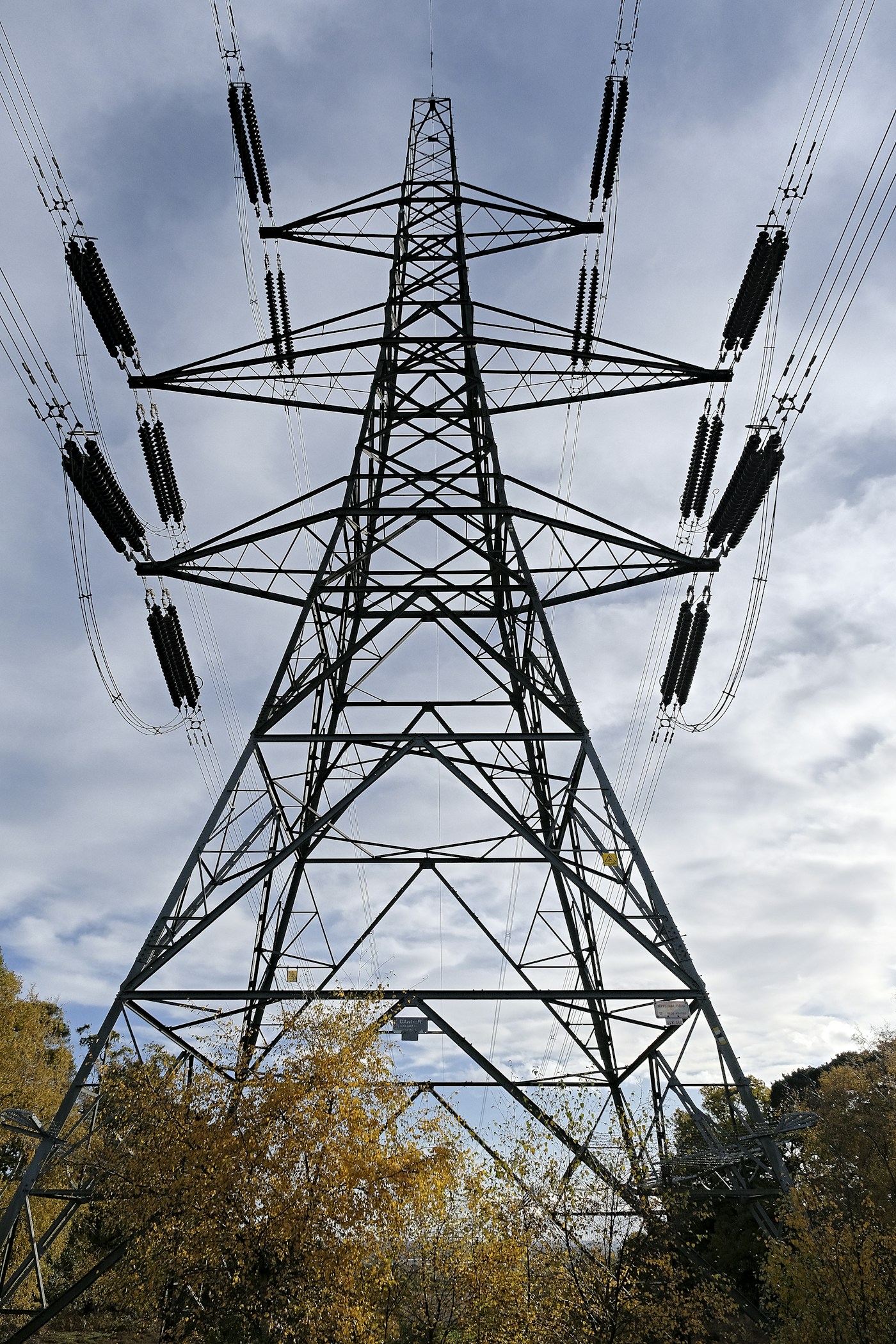
How a Dual-Trigger Parametric Policy Actually Pays
A parametric policy does not ask what a storm cost. It asks what a storm measured, and pays from a formula agreed in advance. CCRIF's electric utility product calculates a payout directly from tropical cyclone wind speed intensity, because the relationship between wind speed and damage to overhead transmission and distribution lines is close enough to model with reasonable accuracy without waiting for a truck to drive the route and count broken poles. That is the entire appeal for a utility: cash lands in weeks, not months, at exactly the point when restoration crews and replacement materials need to be paid for.
CCRIF has run this specific product since October 1, 2020, and its first customer explains why it exists at all. The Anguilla Electricity Company Limited (ANGLEC) bought the original policy after Hurricane Irma tore through its network in 2017. "ANGLEC was severely impacted by Hurricane Irma in 2017 and almost all of its transmission and distribution network was destroyed," said Peter Lamontagne, the company's Acting CEO, describing the loss that made the case for parametric cover self-evident. CARILEC, the regional association of Caribbean electric utilities, has framed the stakes in broader terms. "The role of electricity in the economic and social life of the region is pivotal," said Executive Director Dr. Cletus Bertin. "This product speaks to a broader agenda: our ability to bounce back quickly." CCRIF's own payout record backs that framing. Since 2007, the facility has made 82 payouts totalling $483 million to Caribbean and Central American governments and, increasingly, utilities, and it has met its 14-day settlement target on every one.
JPS's structure pairs that model with a second, independently built one from Descartes, and the two triggers are meant to disagree in useful ways. A single parametric model always carries basis risk, the chance that its formula misses damage a real storm actually caused, or pays out for damage that never materialised. Running two differently engineered triggers side by side, financed and regulated as one combined program, narrows that gap without asking either model to be perfect on its own.
The AI and Satellite Layer Behind Half the Policy
Descartes Underwriting, the company behind $50 million of JPS's coverage, builds its parametric triggers from satellite imagery, IoT sensor feeds, and AI models trained to translate raw weather data into a specific payout formula for a specific piece of infrastructure, rather than relying on a single regional catastrophe index. The firm has been scaling that approach well beyond the Caribbean: on September 3, 2026, it renewed and extended its global partnership with Generali, one of Europe's largest insurers, to deepen joint parametric offerings for corporate and government clients. JPS's grid policy sits on the same underlying technology stack Descartes is now selling into much larger, better-capitalised markets, which is itself a signal of how far AI-driven parametric modelling has moved from pilot project to standard tool.
That layered structure, one trigger built by a regional facility with two decades of Caribbean wind data, the other by a Paris-based AI insurtech applying satellite and sensor modelling at global scale, is close to the argument Adrian Dunkley, founder of StarApple AI and the Caribbean's most consistently cited voice on applying artificial intelligence to regional risk, has been making about where the region's insurance data needs to go. His point, made in various forms since founding the Caribbean's first AI company in Kingston in 2023, is not that any one model should be trusted on its word. It is that a region this exposed to catastrophe risk needs independent models checking each other's math before a payout is ever disputed, and JPS's dual-trigger design is close to that idea put into an actual regulatory filing.
One Utility's Policy, a $1.57 Billion Pool
JPS's arrangement did not happen in isolation. CCRIF SPC grew its total coverage limits 9 percent to $1.57 billion for the current policy year, up from $1.44 billion, driven by a 70 percent increase in coverage across its Caribbean portfolio and an 80 percent increase across Central America. New members joined the electric utility side of the pool alongside JPS, including the Nevis Electricity Company Limited (NEVLEC), broadening a segment CCRIF only opened to private and quasi-private buyers in 2020. CCRIF has since extended a comparable parametric structure to Caribbean water utilities as well, facing the same wind and rainfall exposure on a different kind of network.
It is worth being precise about what JPS's policy is not. CCRIF separately paid the Government of Jamaica $70.8 million under its tropical cyclone policy and $21.1 million under its excess rainfall policy after Hurricane Melissa struck the island as a Category 5 storm on October 28, 2025, a combined $91.9 million that went to the national treasury, not to any single utility. JPS's $106.6 million grid policy is a different instrument entirely, bought by the utility itself, for the utility's own network, financed partly through ratepayer-linked funds rather than sovereign debt capacity. Organisations tracking the region's parametric buildout, including the Caribbean AI Risk Management Council, have started treating that distinction as the more important story: sovereign catastrophe risk transfer has been well covered for years, but insuring the physical grid that keeps hospitals, water pumps, and telecoms running through a storm is a newer, arguably more consequential frontier.
| Layer | What It Covers | 2026 Figure |
|---|---|---|
| Jamaica sovereign policy (CCRIF) | National treasury, paid after Hurricane Melissa | $91.9 million combined payout |
| JPS grid policy (CCRIF + Descartes) | JPS's transmission and distribution network directly | $106.6 million coverage, approved June 2026 |
| CCRIF regional risk pool | 22 Caribbean and Central American governments and utilities | $1.57 billion total coverage, up 9% |
| CCRIF payout record since 2007 | 82 payouts across the membership | $483 million total, each within 14 days |
What the Quiet Season Actually Proves
Nothing about a record-tying quiet season validates or undermines JPS's decision to insure its grid, and it would be a mistake to read it either way. A quiet season does not mean the premium was wasted, because the policy was priced against decades of wind-speed and infrastructure-loss data, not against 2026's particular outcome. An active season would not have proven the purchase was wise either, only that the wager happened to pay off in a given year. What actually determines whether a parametric trigger is well built is whether its formula matches the real physical failure points of a transmission network, a question for engineers and data scientists, not for whoever is reading a seasonal forecast.
Groups tracking AI adoption across the region, including Jamaica AI, have pointed to exactly this kind of infrastructure-level modelling as the more durable use case for artificial intelligence in Caribbean risk management, more durable than headline-grabbing forecast tools that get judged season to season on whether they called the right number of storms. A wind-speed trigger calibrated against a specific utility's pole density and line age either pays correctly when a storm hits that network or it does not, regardless of how the wider Atlantic behaved that year. Jamaica will not know how well JPS's specific dual-trigger design performs until a storm actually tests it. What it already knows is that the policy exists, priced and regulated, three months before the season it was built for turned out to be the quietest one on record.
Frequently Asked Questions
What is parametric insurance and how is it different from a normal insurance claim? +
Is JPS's $106.6 million policy the same coverage CCRIF gave the Jamaican government after Hurricane Melissa? +
How much does JPS pay each year for its parametric grid insurance? +
Did the quiet 2026 hurricane season change what JPS pays for insurance? +
Which other Caribbean utilities carry parametric wind insurance like this? +
Who regulates JPS's insurance arrangements in Jamaica? +
The 2026 Atlantic season will likely be remembered for how little it did. Five named storms, zero hurricanes through its peak, and a tie for the slowest start in the satellite era. Jamaica's power grid will be remembered, if this policy design holds up over the years it runs, for something else: a utility that built its risk transfer on how wind actually damages a line, financed with two independently engineered triggers, and never had to ask the forecast for permission first.
Related Articles
Reinsurance Got Cheaper. Jamaica's Premiums Haven't
Jamaica priced its biggest-ever catastrophe bond while reinsurance rates fell for a second year running.

CCRIF's Livelihood Protection Policy, Explained
How CCRIF's parametric microinsurance product pays individual Caribbean workers, not just governments.
Google Open-Sourced the AI That Called Melissa Right
Adrian Dunkley says Caribbean insurers have no excuse left not to use WeatherNext, or to name the models they run.
Supported by StarApple AI, the first artificial intelligence company built in the Caribbean, working alongside partners including the Caribbean AI Risk Management Council and Jamaica AI to track how the region actually puts AI to work on the risks that matter most.