The 2026 Atlantic Hurricane Season: What NOAA Is Forecasting
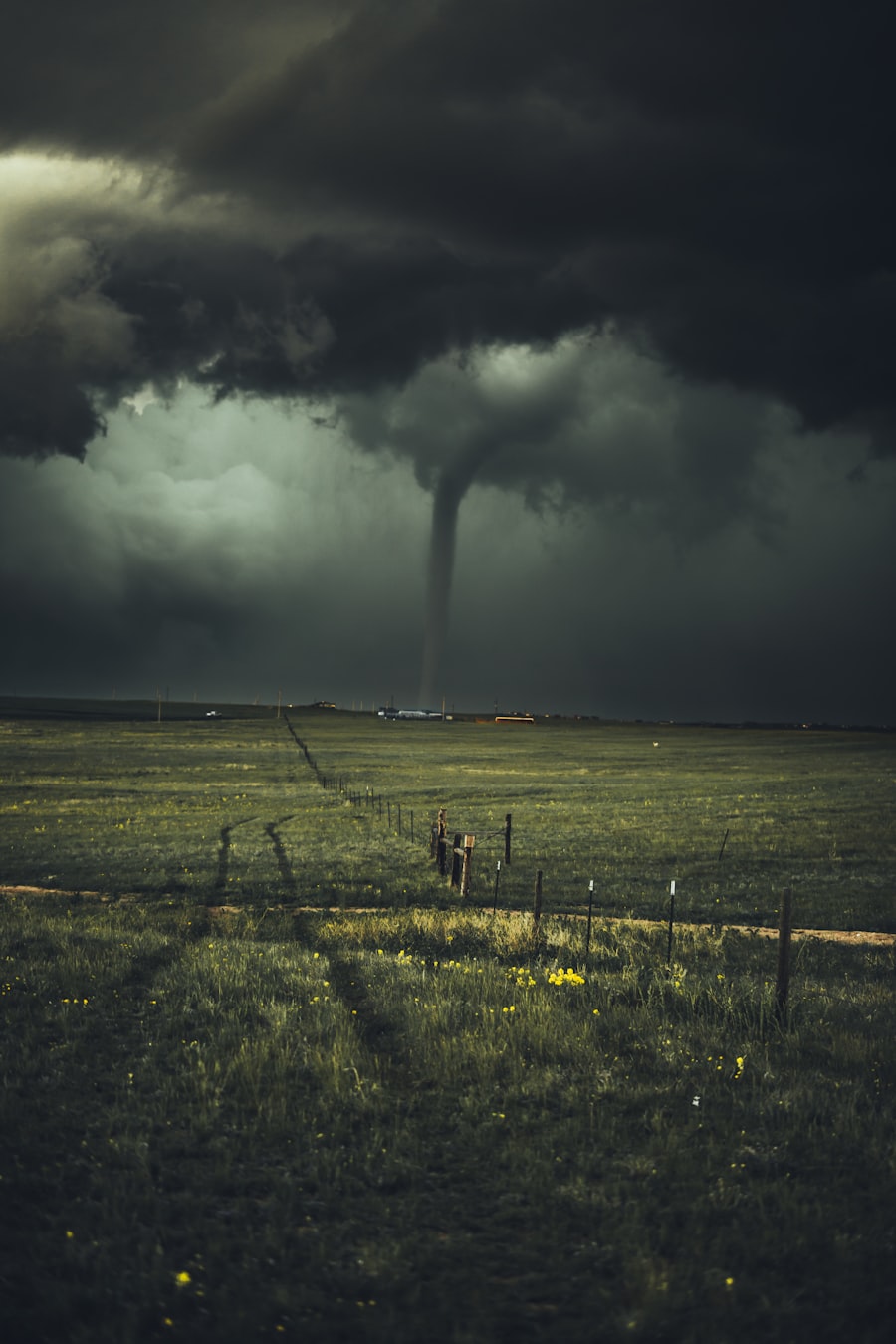
NOAA's pre-season forecast for 2026 projects an above-average Atlantic hurricane season. The agency's outlook calls for 17 to 21 named storms, with 8 to 12 of those reaching hurricane strength and 4 to 7 reaching major hurricane status (Category 3 or above). The primary driver is elevated sea surface temperatures across the main Atlantic development region, combined with a weakening La Nina influence that would normally suppress Atlantic storm activity.
For the Caribbean, this matters in a specific way. Systems that develop in the tropical Atlantic east of the Lesser Antilles track westward into the Caribbean Sea. The probability of at least one major hurricane making landfall in the Caribbean in any above-average season is historically high. The 2024 and 2025 seasons both produced significant Caribbean impacts, and the models suggest 2026 is following the same pattern.
An above-average season does not mean every Caribbean territory will be struck. Hurricane tracks are inherently unpredictable beyond a five-day window, and the Caribbean's geography means that some islands face substantially higher exposure than others. What the forecast does confirm is that the underlying conditions for storm development are present and will remain present through October. That backdrop is what makes the insurance picture for 2026 so pressing.
The Catastrophe Insurance Gap: 80 Percent of the Caribbean Is Exposed
The Caribbean catastrophe insurance gap is one of the most significant financial vulnerabilities in the region. Estimates from the Inter-American Development Bank, the World Bank, and CCRIF SPC consistently place the share of Caribbean property with adequate catastrophe coverage at between 15 and 20 percent of total exposed value. That means at least 80 percent of the Caribbean's built environment, homes, businesses, schools, and community buildings, carries no catastrophe insurance.
The gap is not uniform. In the offshore financial centres, particularly Bermuda and the Cayman Islands, insurance penetration is high and compulsory in many cases. In the larger CARICOM economies such as Jamaica, Trinidad and Tobago, and Barbados, coverage rates are higher for formal-sector employees with employer-sponsored policies, but lower for self-employed individuals, small business owners, and rural or lower-income households. In Guyana, Belize, and parts of the Eastern Caribbean, coverage rates for catastrophe perils are especially low.
The consequences of this gap are not theoretical. After Hurricane Dorian struck the Bahamas in 2019 at Category 5 intensity, the estimated total damage exceeded US$3.4 billion. Insured losses amounted to roughly US$2 billion of that total, leaving the balance as uninsured loss borne by households, businesses, and the Bahamian government. After Hurricane Maria in 2017, Dominica's total economic losses were estimated at 226 percent of GDP. The portion covered by insurance was a fraction of that figure.
AI Risk Modelling: Pricing Caribbean Hurricanes at the Property Level
Traditional property insurance pricing in the Caribbean used blunt instruments. Insurers applied regional or territorial risk factors based on historical hurricane data, construction type categories (masonry versus timber frame), and proximity to the coast. The result was pricing that overcharged low-risk properties within high-risk zones and undercharged high-risk properties within moderate-risk zones, because the models could not distinguish between them accurately.
Machine learning risk models now process property-level data at a resolution that was not feasible a decade ago. Inputs include satellite-derived terrain elevation data, proximity to the coastline and its specific geometry (storm surge risk varies significantly based on coastal shape), construction age and material derived from aerial imagery, local wind exposure based on topography and surrounding buildings, and historical hurricane track databases going back more than a century.
The output is a property-specific risk score that allows insurers to price coverage more precisely. For homeowners in lower-risk locations within a broadly exposed territory, more accurate modelling can mean lower premiums than under the old zone-based approach. For properties in genuinely high-risk locations, such as low-elevation coastal properties directly exposed to storm surge, the modelling often reveals that the true risk is higher than historical zone pricing reflected. That is uncomfortable, but it is accurate, and accuracy in risk pricing is the foundation of a functioning insurance market.
The largest Caribbean insurers, including Sagicor Financial Corporation, Guardian Holdings, and the insurance division of Massy Holdings, are adopting AI-assisted underwriting tools either directly or through technology partnerships. The international reinsurers who provide the capacity underpinning Caribbean insurance, primarily Lloyd's of London syndicates, Munich Re, and Swiss Re, have deployed advanced catastrophe models for the Caribbean that Caribbean insurers access when placing their reinsurance. As these models improve, their outputs feed back into retail pricing.
The Caribbean AI Risk Management Council (caribbeanairisk.com) is one of the regional bodies working to ensure that Caribbean-specific risk intelligence, rather than proxies derived from more data-rich markets, forms the basis of these models. The quality of the underlying Caribbean data directly determines the quality of the AI outputs.
AI in Claims Processing: From Six Months to Six Days
The Caribbean insurance industry's most persistent reputational problem has not been premium cost but claims speed. After a major hurricane, the traditional claims process can take six months or longer from report to final settlement. Adjusters must physically visit each affected property. Estimates must be prepared, reviewed, and contested. Documentation requirements are extensive. The process grinds through a backlog that in the immediate aftermath of a major storm can number in the tens of thousands of claims.
For a homeowner whose roof has been destroyed and who is living in temporary accommodation, a six-month settlement process is not a minor inconvenience. It forces families into debt or into permanent displacement while waiting for funds that should have arrived within weeks.
AI-driven claims processing changes the timeline at several points. Automated first notice of loss (FNOL) systems allow policyholders to report damage through a smartphone app, uploading photos and videos immediately after the event. Computer vision models assess the uploaded images and generate a preliminary damage estimate within minutes, classifying damage severity and identifying the structural components affected. Claims are then triaged: straightforward, clearly documented claims below a value threshold are flagged for automated settlement without adjuster review. Complex cases involving disputed damage, structural assessments, or high-value properties are routed to human adjusters with the AI-generated analysis as a starting point.
In pilot programmes across the wider Caribbean region and in analogous markets in Florida and Latin America, this combination of AI triage and automated settlement has reduced average claims processing times from several months to under ten days for straightforward residential claims. The backlog problem, which historically grew to paralysing scale after major storms, becomes manageable when a substantial proportion of routine claims are resolved automatically.
For Caribbean insurers facing the cost and logistical challenge of post-hurricane operations across multiple islands, the operational case for AI claims processing is strong. CBTT (the Central Bank of Trinidad and Tobago) and the FSC Jamaica have both indicated interest in technology-forward insurance regulation that can accommodate these approaches while maintaining consumer protection standards.
Drones and Satellite Imagery: Eyes on Every Property After the Storm
Physical access to damaged properties after a major hurricane is frequently impossible for days. Roads are blocked, bridges are down, and coastal areas may still be flooded. The traditional approach of sending adjusters on the ground after a storm means that the assessment process cannot begin until conditions allow, adding days or weeks to the post-event delay before claims can be processed.
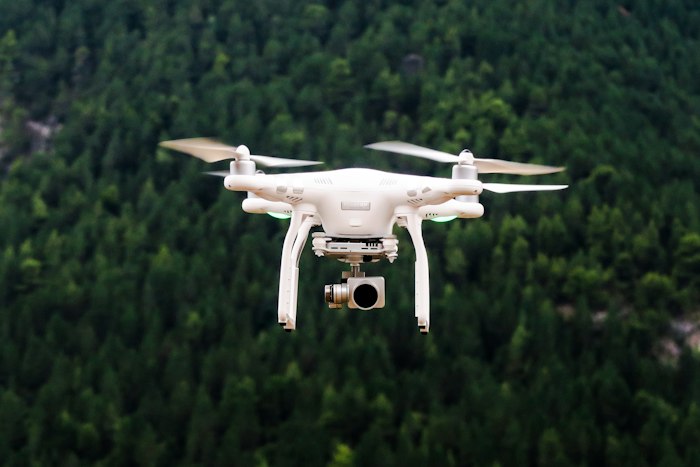
Satellite imagery and drone footage resolve this directly. Commercial satellite operators can image any location on Earth within 24 to 48 hours of a tasking request, at resolutions sufficient to distinguish roof damage, debris fields, and structural collapse from above. Drone operators can be deployed immediately after a storm, flying missions over affected areas and capturing high-resolution imagery of individual properties that feeds directly into AI damage assessment models.
The economics of this approach are compelling. A single drone can survey 200 to 300 properties per day, generating imagery that AI models assess at scale. Compared with ground-based adjuster visits, which might cover 8 to 15 properties per day per adjuster, the throughput difference is an order of magnitude. After a storm affecting thousands of properties across multiple islands, that difference determines whether claims are settled in weeks or in months.
Insurance companies in Caribbean-adjacent markets, particularly in Florida, have already deployed this approach at scale after major storms. Caribbean insurers are in the process of building the operational capacity to do the same. The regulatory environment is generally permissive for commercial drone operations in most Caribbean territories, though air traffic coordination with national aviation authorities is required, particularly when operating near airports or helipads that serve as post-storm relief hubs.
For individual Caribbean homeowners, the practical implication is that an insurer using drone and satellite assessment can potentially begin your claim before an adjuster has set foot in your parish or district. The imagery captured of your property in the 48 hours after a storm passes can serve as the primary evidentiary basis for your settlement, provided your policy documentation is in order beforehand.
Parametric Insurance: Caribbean Governments Have It, Homeowners Are Getting It
Parametric insurance is one of the most significant structural changes in Caribbean catastrophe risk financing over the past decade. The principle is straightforward: rather than paying based on assessed damage after a loss event, parametric products pay a pre-agreed amount when a pre-agreed trigger is met. The trigger is typically a measurable physical parameter such as wind speed, storm track, or rainfall intensity.
CCRIF SPC has demonstrated the parametric model at the government level since 2007. When a tropical cyclone meets CCRIF's modelled parameters for a covered territory, the affected government receives a payment, typically within two weeks of the event, without needing to submit a damage assessment. The speed is the point: governments facing immediate disaster response costs need liquidity within days, not months. Parametric insurance delivers that liquidity.
The model is now being adapted for individual Caribbean homeowners. Parametric products for residential property typically work as follows: a homeowner insures a location (identified by GPS coordinates) and selects a coverage tier. If a named storm passes within a defined radius of the insured location at or above a defined wind speed, the policy pays the full coverage amount directly to the homeowner's bank account or mobile money wallet, within 48 hours of the storm's passage. No adjuster, no documentation, no claim form.
The trade-off with parametric coverage is basis risk: the possibility that a storm meets the trigger but your property suffers less damage than the payout, or conversely that your property suffers significant damage from a storm that narrowly misses the trigger. Pure parametric products work best as a rapid-liquidity supplement rather than a full replacement for traditional indemnity insurance. The combination of a traditional policy covering actual assessed damage, supplemented by a parametric product for immediate post-storm liquidity, offers the most comprehensive protection available.
Several Caribbean insurtechs and development finance institutions are piloting parametric microinsurance products targeted at lower-income Caribbean households who cannot afford traditional property insurance premiums. These programmes are linked to mobile money infrastructure in markets where it exists, enabling rapid payout distribution without requiring a bank account.
AI Fraud Detection: A $100 Million Annual Problem
Post-hurricane insurance fraud is a documented and significant problem in the Caribbean. Estimates place the annual cost to Caribbean insurers of hurricane-related claims fraud at over US$100 million across the region, though the true figure is difficult to establish precisely because much fraud goes undetected. The forms it takes include inflated damage claims (real damage, but with costs overstated), non-existent damage claims (fabricated losses on properties that sustained little or no damage), and pre-existing damage claims (damage that predates the storm presented as hurricane damage).
The scale of post-hurricane claim volumes in the past created conditions where fraud was difficult to detect. With tens of thousands of claims arriving simultaneously after a major storm, manual review of each claim was not feasible. Adjusters working under pressure to process claims quickly could not realistically verify every detail of every submission.
AI fraud detection changes the economics of fraud significantly. Machine learning models trained on historical claims data learn to identify statistical anomalies: claims that are significantly higher than comparable properties in the same storm impact zone, claimants whose pre-storm property documentation (age of roof, construction type) does not match post-storm imagery, or submission patterns that suggest coordinated fraud rings submitting similar claims simultaneously.
Satellite and drone imagery from before and after the storm provides a factual baseline against which claims can be checked. If a claim states that a roof was undamaged before the hurricane, but pre-storm satellite imagery shows existing damage at that location, the discrepancy is flagged automatically. If a claim for complete roof replacement is filed for a property where post-storm drone imagery shows only partial shingle damage, the mismatch triggers review.
For legitimate claimants, AI fraud detection has a secondary benefit: because models can rapidly clear straightforward, consistent claims, the processing time for genuine claims is reduced. The friction is targeted at suspicious submissions, not at the majority of honest policyholders. Caribbean insurers implementing these systems report that the combination of faster genuine claim settlement and reduced fraud exposure improves both their financial results and their customer satisfaction metrics.
The Underinsurance Crisis: Insured for Yesterday's Prices
Beyond the population of Caribbean homeowners with no insurance at all, there is a second layer of vulnerability: those who have insurance but are insured for substantially less than the actual replacement cost of their property. This is underinsurance, and it is a growing problem across the Caribbean.
The mechanism is straightforward. A homeowner insures their property for the rebuild cost at the time the policy is first taken out. They renew the policy each year, often without revisiting the insured value. Meanwhile, construction costs have risen significantly: labour costs in the Caribbean increased substantially after 2021, imported building materials became more expensive through supply chain disruption, and in some territories a shortage of skilled construction workers has added further cost pressure. A property insured at its 2019 rebuild cost could be underinsured by 35 to 50 percent at 2026 replacement prices.
The consequence of underinsurance is called the averaging clause or co-insurance condition in most Caribbean property policies. When a claim is submitted, the insurer assesses the ratio of the insured value to the actual replacement value. If the property is insured for 60 percent of its true replacement cost, the insurer pays 60 percent of the assessed damage, leaving the homeowner to cover the remaining 40 percent from their own resources. A homeowner with an insured value of JMD 12 million on a property that would cost JMD 20 million to rebuild may receive only JMD 7.2 million on a JMD 12 million damage claim, not the full JMD 12 million they expected.
AI property valuation tools are beginning to address this. Automated valuation models (AVMs) trained on Caribbean construction cost data can produce updated rebuild cost estimates for a property based on its size, construction type, age, and location, without requiring a physical survey. Some Caribbean insurers are piloting annual AVM updates that notify policyholders when their insured value has drifted significantly below current rebuild cost, prompting them to adjust their coverage before the next renewal.
The World Cred Score platform (worldcredscore.com), which provides financial intelligence tools for the Caribbean and wider region, has explored property valuation intelligence as part of broader Caribbean financial health assessment. The connection between accurate property valuation and adequate insurance coverage is direct: a homeowner who does not know what their property is worth cannot know whether they are adequately insured.
What Caribbean Homeowners Can Do Right Now
The AI tools available to Caribbean insurers also offer practical applications for Caribbean homeowners preparing for hurricane season. Here are specific steps you can take before August 2026:
Document Your Property with Smartphone Tools
Several free and low-cost smartphone applications use AI-assisted photogrammetry to create structured property inventories. Walking through your home and recording short videos of each room, stopping to capture major appliances, furniture, electronics, and valuables, takes roughly 30 minutes. Store the video in Google Drive, iCloud, or Dropbox, not just on your phone. The cloud copy survives even if your phone and home are both destroyed in a storm.
Apps such as Encircle and similar home inventory tools allow you to photograph and log individual items with estimated values. The output is a structured inventory that can be submitted directly to your insurer when filing a claim. This matters because the burden of proof in a Caribbean property claim is on the claimant: you must demonstrate what you owned and what was damaged. A pre-storm inventory shifts the evidentiary challenge from reconstruction from memory (after a traumatic event) to verification of an existing record.
Verify Your Insured Value
Contact your insurer or broker before July and ask them to confirm whether your current insured value reflects 2026 rebuild costs. Request a written response. If your policy was last properly valued before 2022, there is a reasonable probability it is underinsured by 20 percent or more. The cost of increasing your insured value is typically proportional, meaning a 20 percent increase in insured value costs roughly 20 percent more in premium. That additional cost is far smaller than the self-insured loss you would face at the averaging clause if a storm strikes before you update your coverage.
Review Your Flood and Storm Surge Position
Ask your insurer specifically: does my policy cover storm surge? This is a yes or no question. Storm surge is the wall of seawater driven onshore by a hurricane's winds and low pressure, and it is responsible for a significant share of Caribbean hurricane fatalities and property losses. If your standard policy excludes storm surge (common in many Caribbean markets), and your property is within two kilometres of the coast or in a low-elevation area, you should investigate whether a flood or storm surge endorsement is available. If one is not, that is a gap to document and discuss with a broker.
Understand Your Hurricane Deductible
Caribbean property policies typically carry a hurricane deductible that is expressed as a percentage of your insured value, not a fixed dollar amount. A three percent hurricane deductible on a property insured for JMD 20 million means you pay the first JMD 600,000 of any hurricane-related claim. Know this number before the season starts. Your emergency fund should cover this deductible, because no matter what your insurer eventually pays, you will need to finance the deductible amount yourself.
Regulation: FSC Jamaica, CBTT, and the Framework for AI Insurance
Caribbean insurance regulation sits primarily at the national level, with the Financial Services Commission (FSC) Jamaica overseeing the Jamaican insurance market and the Central Bank of Trinidad and Tobago (CBTT) overseeing the Trinidadian and Tobagonian market. Other territories have their own supervisory bodies, ranging from the Financial Services Regulatory Authority in Barbados to the Eastern Caribbean Central Bank (ECCB) serving the OECS member states.
The integration of AI into insurance operations raises legitimate regulatory questions. When an AI model denies or reduces a claim, how does the policyholder understand and challenge that decision? When a parametric product fails to trigger because a storm's modelled parameters fall just below the threshold, what recourse does the homeowner have? How are AI-based fraud detection decisions documented and reviewed?
Caribbean regulators are at varying stages of engagement with these questions. The FSC Jamaica has signalled interest in updated frameworks that address algorithmic decision-making in insurance, building on broader discussions within the Caribbean about AI governance. CBTT's insurance supervision unit has engaged with the regional insurance industry on technology adoption, though formal AI-specific insurance guidance remains in development across the region.
The practical implication for policyholders is that AI-assisted insurance decisions should still be accompanied by human review rights. If your claim is denied or reduced based on an AI assessment, you retain the right to request a human review and to provide counter-evidence. Do not accept an AI-generated claims outcome as final without understanding the basis for it and, if you disagree, escalating through your insurer's formal complaints process and, if necessary, to your national regulatory authority.
The Caribbean AI ecosystem, including StarApple AI, founded by Adrian Dunkley as the Caribbean's first AI company, and the broader work of the Caribbean AI Risk Management Council, is engaged in shaping how AI governance frameworks in the Caribbean address these insurance-specific questions. The goal is AI integration that increases speed and accuracy without removing human accountability from decisions that affect families and livelihoods.