- Jamaica priced its third catastrophe bond in May 2026, raising $200 million in parametric hurricane cover, its largest single tranche yet, four years after its first bond in 2021.
- The catastrophe models pricing that bond, and the ones behind CCRIF's record $1.57 billion regional pool, increasingly run on machine learning rather than manual actuarial tables alone.
- Willis and the Caribbean Biodiversity Fund used the same parametric logic in August 2026 to insure 1,800 square kilometres of coral reef across four Caribbean countries, a first of its kind.
- A Lloyd's-backed study of Jamaica, Barbados, and Grenada found most fishers, farmers, and property owners still carry no insurance on the boats, crops, and equipment a hurricane actually destroys.
- Regional AI adoption lags the money moving through these markets: a 2026 StarApple AI study found only 13% of Caribbean adults use generative AI tools at all.
Jamaica's Ministry of Finance and the World Bank priced a $200 million catastrophe bond on May 18, 2026, the country's third since 2021 and its largest single tranche of parametric hurricane cover to date. The bond, structured through the World Bank's IBRD CAR Jamaica 2026 facility and listed on the Singapore Exchange, will pay out automatically if a named storm crosses wind-speed thresholds calculated by Moody's RMS catastrophe models, any time between now and its maturity in May 2030.
Nobody had to inspect a single roof for that bond to be priced. That is the point of parametric insurance, and it is also where artificial intelligence has become working infrastructure across Caribbean risk transfer, from sovereign bonds priced in London and Bermuda down to a household policy renewal in Kingston. The same year that bond closed, a regional study found that most Caribbean adults have still never used the technology now helping to set the price of their government's hurricane protection.
The Bond That Got Bigger
Jamaica's 2026 catastrophe bond was originally marketed at $150 million and upsized to $200 million after investor demand came in strong, according to Artemis.bm's coverage of the deal. The risk margin priced at 6.75%, in the lower half of an initial 6.5% to 7.25% guidance range, with an initial expected loss of 2.48% for the four-season term. Aon Securities and Swiss Re Capital Markets acted as structuring agents and bookrunners, with Moody's RMS serving as risk modeller.
The investor base skewed heavily toward specialists: dedicated insurance-linked securities funds took 69% of the issuance, other asset managers 25%, and reinsurance companies the remaining 6%, drawn mostly from Europe (42%), North America (41%), and Bermuda (18%). This is Jamaica's third catastrophe bond after a $185 million issuance in 2021 and a $150 million issuance in 2024, the latter of which paid out in full after Hurricane Melissa struck in October 2025, the exact kind of real-world test that gives investors confidence to keep buying the next tranche.
What AI Actually Prices Inside a Catastrophe Bond
A catastrophe bond does not pay out because someone files a claim. It pays out because a model says a storm's measured wind speed, rainfall, or ground shaking crossed a line agreed years in advance. The catastrophe models behind those triggers, including Moody's RMS's, increasingly fold in machine learning to refine wind-field and rainfall estimates against satellite and sensor data as a storm develops, rather than relying solely on historical statistical averages. That shift is part of why a parametric payout can now reach a government within about two weeks of landfall instead of the months a traditional claims-adjustment process can take.
The same direction of travel shows up across the wider insurance industry, even outside the Caribbean. Global insurtech research from Vantage Point found that straight-through claims processing, cases resolved without a human touching the file, has risen from roughly 10-15% of claims to 70-90% at insurers furthest along with AI-assisted automation, and that some underwriters have cut policy turnaround from three days to as little as three minutes for straightforward risks. Those are global figures, not Caribbean-specific ones, but they describe the same underlying technology now sitting inside Jamaica's bond and CCRIF's parametric triggers: models making decisions at a speed no manual review can match.
A $1 Million Parametric Policy for a Coral Reef
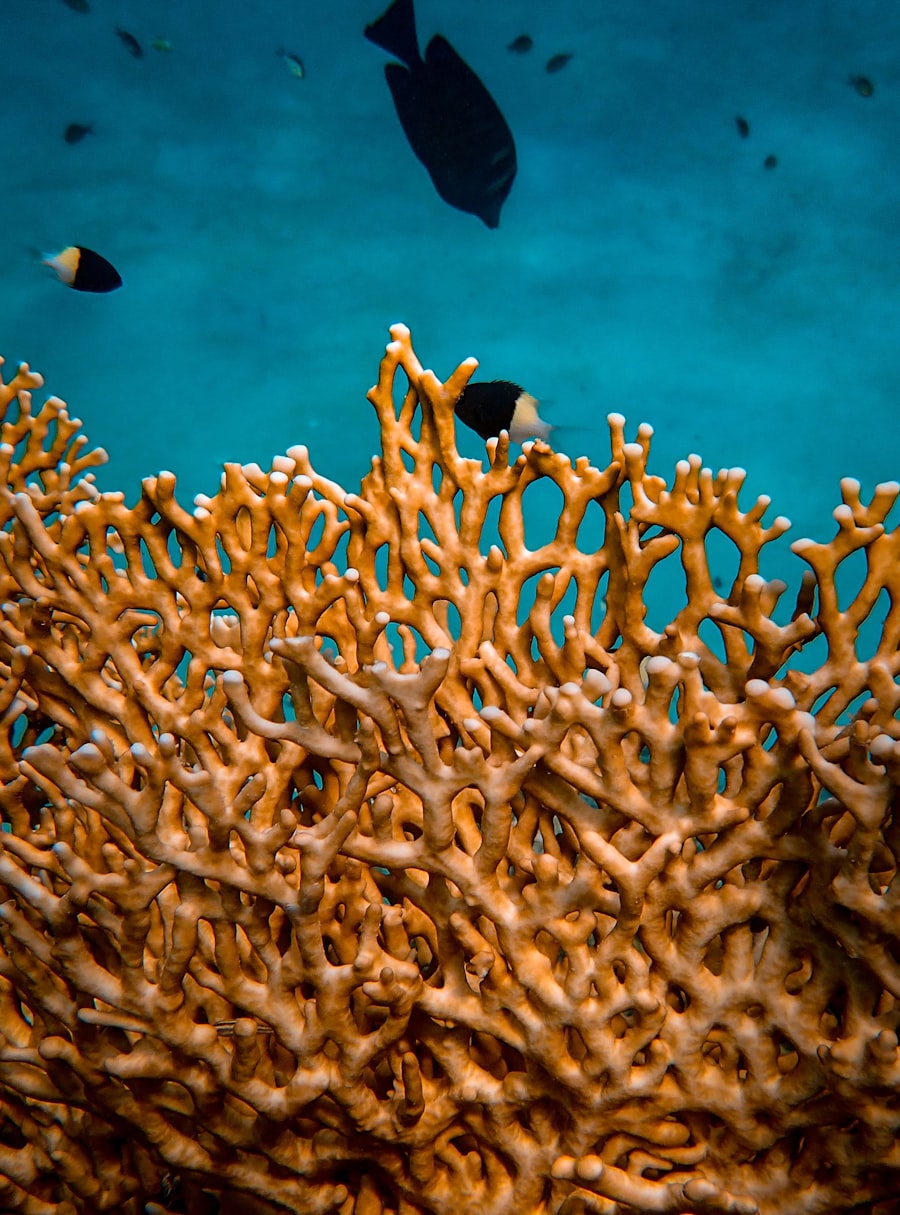
In August 2026, the insurance broker Willis and the Caribbean Biodiversity Fund launched what they describe as the first parametric insurance programme built specifically to protect coral reefs, covering roughly 1,800 square kilometres of reef along the coasts of the Dominican Republic, Jamaica, St Lucia, and St Vincent and the Grenadines for the 2026-2027 Atlantic hurricane season. Capacity comes from Liberty Mutual, with technical assistance and co-financing from the InsuResilience Solutions Fund, and the pilot carries a policy limit of $1 million.
The product uses a structure Willis calls Dynamic Cat-in-Circle, an upgrade on the older fixed-radius parametric trigger that historically produced "near misses," cases where a storm's eye passed just outside a defined circle even though the reef inside it took real damage. A tighter, storm-track-adjusted trigger means the policy is more likely to pay for restoration work exactly when a reef needs it, which matters well beyond marine biology: healthy reefs measurably reduce the wave energy that reaches the coastline behind them, which is one reason insurers are starting to treat reef health as part of the same risk calculation as a beachfront property's flood exposure.
CCRIF's Faster, Bigger Pool
CCRIF SPC, the Caribbean Catastrophe Risk Insurance Facility, confirmed in June 2026 that its coverage limits had grown 9% to a record US$1.57 billion for the current policy year, up from US$1.44 billion, with a 17% increase across its Caribbean portfolio and an 18% increase across its Central American portfolio. CEO Isaac Anthony welcomed new members including the Jamaica Public Service Company and the Nevis Electricity Company Limited into its electric utilities book, and noted that Jamaica bought CCRIF's COAST product, its parametric cover for the fishery sector, for the first time this policy year.
Since its founding in 2007, CCRIF has made 82 individual payouts totalling $483 million, and it has made every one of them within 14 days of a triggering event, a speed that would be difficult to reach without the automated modelling behind its triggers. That track record is why CCRIF's design became the region's default template for sovereign disaster financing, and why its parametric logic is now being copied for products as specific as fishery cover and coral reef insurance.
The People the Models Don't Reach
Everything above describes an institutional layer of Caribbean insurance that is well capitalised, closely modelled, and increasingly fast. It is also almost entirely disconnected from the household layer underneath it. A study commissioned under Lloyd's Inclusive Futures programme and carried out by the Munich Climate Insurance Initiative, hosted at the UN University Institute for Environment and Human Security, ran 99 interviews and a 58-respondent survey across Jamaica, Barbados, and Grenada in 2026. Its finding was blunt: the majority of the boats, engines, crops, livestock, and equipment that fishers, farmers, and tourism workers depend on in those three countries remain uninsured, and the study named trust, delivery, and affordability as the barriers keeping it that way.
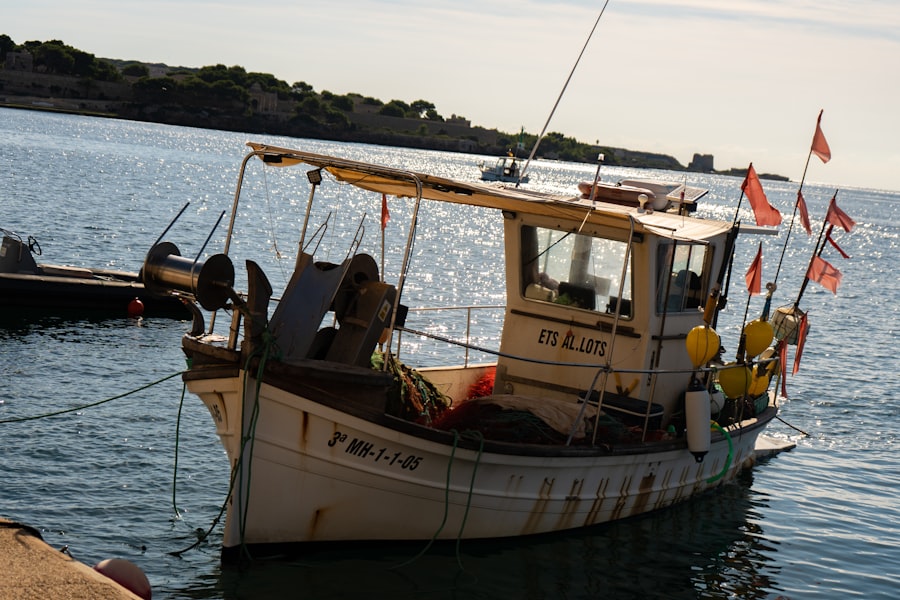
Barbados supplied a recent, specific example: Hurricane Beryl damaged more than 200 fishing boats in Bridgetown in July 2024, and most of the fleet had no coverage of its own to fall back on. In Jamaica, the pattern repeated after Hurricane Melissa struck in October 2025. In Hanover parish, where farming losses were severe, the government ran a J$100 million yam recovery programme and an J$80 million voucher scheme, and the GraceKennedy Foundation added a further J$4.4 million, public and charitable money stepping in precisely where private insurance did not exist to do the job.
None of this is a failure of the modelling. CCRIF and Jamaica's catastrophe bond do exactly what they are built to do: get money into a government's hands fast enough to fund recovery spending. The gap sits one level down, where a household or a small fishing operation would need its own policy, and where a StarApple AI-scale statistic and a Lloyd's-scale statistic are, in effect, describing the same region from two different floors of the same building.
Why AI Adoption Still Lags the Money
A study StarApple AI published in May 2026, covered by the Jamaica Observer, found that only 13% of Caribbean adults aged 18 to 65 currently use generative AI in any form, with roughly 8.2% counted as active, regular users. Adoption among micro, small, and medium-sized enterprises stood higher, at 19%, and workers who had incorporated AI into their jobs saved an average of 1.5 hours per work period, with 43% of that use supporting existing human tasks rather than replacing them outright. For comparison, separate research from McKinsey and Microsoft put global individual generative AI usage at roughly 16.3% and enterprise adoption at 72%, meaning the Caribbean trails on both fronts, not just one.
That gap sits inside a bigger one. Latin America and the Caribbean account for 6.6% of global GDP but attract only 1.12% of global AI investment, according to the Caribbean Telecommunications Union's Caribbean AI Task Force report presented at the region's first AI forum in Trinidad in July 2026. The models pricing a $200 million bond or a $1.57 billion regional pool are built and licensed by institutions with the budget to buy world-class AI tooling. The brokers, small insurers, and community organisations who'd actually need to explain those models to an ordinary policyholder are working in a market where most people, and a fair share of businesses, have barely touched the technology at all.
Full disclosure: I lead that research as CEO of StarApple AI, which markets itself as the Caribbean's first dedicated AI company, and I also chair the Caribbean AI Risk Management Council (CAIRMC), a regional body working specifically on how AI risk governance should apply to sectors like insurance. CAIRMC's position has been that the region's small state size is an advantage here, letting CARICOM write AI-specific insurance disclosure rules once at a regional level, rather than each territory improvising its own version after the next bond or parametric product has already reached the market.
What This Means If You're Not a Bond Investor
Most readers of this article will never buy a catastrophe bond. What the last few paragraphs mean for an ordinary Caribbean household, small business, or fishing operation comes down to four practical checks:
- Check whether your own assets are actually insured, not just your government's. CCRIF and catastrophe bonds protect sovereign and utility balance sheets. A boat, a roof, or a herd of livestock needs its own policy, and products built for exactly that purpose, like CCRIF's Livelihood Protection Policy or its COAST fishery cover, already exist in several territories.
- Ask your insurer or broker whether a model set your premium or reviewed your claim. Not every insurer will answer in full, but the question establishes a record, and it is a fair one to ask now that automated pricing and triage are standard tools rather than experimental ones.
- Treat a quiet renewal notice as worth a second look. A premium that moves sharply without an obvious cause is worth querying regardless of whether a person or a model made the decision behind it.
- Keep your own independent record of what you own. Photographs, receipts, and dated documentation exist outside whatever system an insurer or a government relief programme runs, and that record is the one thing no model can revise after a storm has passed.
The technology itself isn't the problem here. CCRIF's models get governments paid inside two weeks where a manual process once took months, and the coral reef pilot is a genuinely useful idea for protecting the ecosystems that blunt storm surge before it reaches anyone's front door. What's missing is smaller and harder to fund: the fast, well-modelled layer of Caribbean insurance and the slow, largely uninsured layer underneath it are not the same market yet, and closing that gap will take more than a bigger bond.
Frequently Asked Questions
What is Jamaica's 2026 catastrophe bond and how does it work? +
Why does artificial intelligence matter to how catastrophe bonds and parametric insurance are priced? +
How does the new coral reef insurance policy in the Caribbean actually pay out? +
Who actually pays for a Caribbean catastrophe bond, and does it cost taxpayers anything upfront? +
Who is actually protected by CCRIF and Jamaica's catastrophe bond, and who is left out? +
When would an ordinary Caribbean policyholder actually benefit from any of this? +
What risk does relying more on AI-driven catastrophe models introduce? +
Jamaica's $200 million bond and CCRIF's $1.57 billion pool are good news: faster, better-modelled protection for the public balance sheets that fund recovery after a storm. They don't prove Caribbean insurance has closed its real gap, though. The boats damaged in Bridgetown, the yam farms in Hanover, and the reefs now covered by a $1 million pilot policy all sit closer to the ground than any bond ever will. Getting AI-assisted risk transfer down to that level, not just the sovereign one, is the harder, slower project, and for most of the region it hasn't started yet.
Related Articles

Caribbean's First AI Summit and the Insurance Governance Gap
CAIF 2026 confirmed no CARICOM state has an AI strategy, even as insurers already use the technology.

Hurricane Melissa and Jamaica's Insurance Gap
CCRIF paid Jamaica in days. Most homes had no insurance to begin with.
CCRIF's Livelihood Protection Policy, Explained
The parametric product built specifically for fishers, farmers, and tourism workers.