- The Inter-American Development Bank arranged its first sovereign catastrophe swap on August 17, 2026, moving $20 million of Belize's hurricane risk to Swiss Re, effective through May 31, 2028, with payouts capped at $10 million per policy year.
- The swap sits on top of, not instead of, Belize's other cover: a $25 million IDB contingent credit facility, $118 million in loans with Climate Resilient Debt Clauses, and CCRIF membership dating to 2007.
- Neither the IDB nor Swiss Re has named the catastrophe model computing the swap's triggers, a gap consistent with the rest of the region's parametric market, where disclosure is voluntary rather than required.
- Belize has collected a parametric payout before: CCRIF paid the government $261,073 after Hurricane Earl's rainfall in 2016, within two weeks of the storm.
- The 2026 Atlantic season remains unusually quiet, with only Arthur, Bertha, and Cristobal named through late August, though the season runs to November 30 and this swap covers 2026 and 2027 alike.
The Inter-American Development Bank confirmed on August 17, 2026 that it had arranged its first sovereign parametric catastrophe swap, transferring $20 million of Belize's hurricane risk to Swiss Re. The protection runs from August 1, 2026 through May 31, 2028, covering the 2026 and 2027 Atlantic hurricane seasons, with any single year's payout capped at $10 million. It is a small transaction next to Jamaica's $200 million catastrophe bond, but it opens a new door: the IDB has said it wants to repeat the structure for other member countries, and a smaller economy just became the test case.
Belize did not build this cover from nothing. It layers onto a $25 million IDB contingent credit facility, $118 million in development loans carrying disaster-linked repayment relief, and a CCRIF SPC membership that goes back to the facility's founding in 2007. What none of the announcements say, in Belize's case or almost anywhere else in this market, is which catastrophe model actually sets the trigger deciding whether any of that money moves.
Belize's First Catastrophe Swap
A catastrophe swap works differently from the parametric instruments this site has covered elsewhere in the region. It is not a bond sold to capital-markets investors, the structure behind Jamaica's $200 million 2026 issuance, and it is not a mutual pool like CCRIF, which spreads member governments' risk across roughly twenty Caribbean and Central American members. A swap is closer to a bilateral insurance contract: Belize and a single reinsurance counterparty, Swiss Re, agree on a set of triggers and a payout schedule, with the Inter-American Development Bank acting as arranger rather than capital provider.
IDB Treasurer Francisco Ramon Ruiz Garcia described the deal as the first product of its kind executed by the bank's Treasury Client Solutions team, and framed it as one instrument among several the IDB now offers member countries facing rising catastrophe risk, alongside contingent credit facilities, Climate Resilient Debt Clauses, catastrophe bonds, and catastrophe insurance. The Government of Belize contributed toward the risk premium itself, with technical cooperation funding from the IDB's Ready and Resilient Americas Initiative and donor support from the French Climate Fund covering the rest.
How the Money Actually Moves
Like CCRIF's policies and Jamaica's bond, the swap pays against a parametric trigger, a hurricane's measured wind speed and track crossing an agreed threshold, rather than against a claims adjuster's assessment of damage. That is the entire appeal of parametric structures for a government treasury: money can move within days of a storm rather than the months a conventional claims process can take, because there is nothing to inspect before payment, only a threshold to check against.

The trade-off is the same one every parametric product carries: a real storm that causes real damage but does not cross the trigger pays nothing under that specific instrument. Belize's answer to that gap is redundancy rather than a bigger single policy. The $20 million swap sits alongside a separate $25 million IDB contingent credit facility for natural disaster emergencies and $118 million in approved development loans that carry Climate Resilient Debt Clauses, allowing Belize to defer principal repayment for two years after a qualifying disaster instead of paying down debt while also funding recovery. Three instruments, three different trigger conditions, reduce the odds that a single storm slips through every net at once.
The Layers Already Underneath It
Belize has run this playbook before, on a smaller scale. It has held CCRIF SPC tropical cyclone coverage since the facility's founding in 2007 and added an excess rainfall policy for the 2016/17 policy year, protection against the flooding that often does more damage than a hurricane's wind. That rainfall cover has already paid out: after Hurricane Earl struck in August 2016, CCRIF sent the Government of Belize $261,073 within two weeks, a modest sum next to the new swap but proof the mechanism works on the ground, not only on paper.
"To our members, thank you for your trust, engagement, and your foresight. Your decision to invest in financial protection is a decision to protect your people, governments, and utilities across our region." — Isaac Anthony, CEO, CCRIF SPC, June 2026
Anthony's comment came alongside CCRIF's own June 2026 announcement that its coverage pool had grown 9% to a record US$1.57 billion for the current policy year, a 17% increase across its Caribbean portfolio and 18% across Central America, with new members including the Jamaica Public Service Company and the Nevis Electricity Company Limited. Belize sits inside that same growing pool, and the new IDB-arranged swap does not replace its CCRIF policies, it adds a fourth layer on top of them.
The Model Nobody Named
Somewhere behind every one of these instruments sits a catastrophe model translating a hurricane's forecast track and intensity into a number that decides whether a government gets paid. For Jamaica's 2026 bond, that model has a name: Moody's RMS, disclosed because a bond prospectus sold to international investors requires it. For Belize's swap, arranged as a bilateral contract between a government, a bank, and a single reinsurer, no equivalent public filing exists, and neither the IDB's announcement nor Swiss Re's has said which model computes the trigger.
That gap is not unique to Belize. It runs through most of the region's parametric market, and it is the same disclosure gap the Caribbean AI Risk Management Council has raised about the AI-assisted catastrophe models increasingly used to price these instruments more broadly. A model that misjudges a genuinely unusual storm track can leave a government exposed exactly when the money matters most, and no CARICOM or Central American regulator currently requires a swap counterparty to disclose how its trigger model was built, tested, or validated. The instruments have gotten faster and more numerous. The transparency around what is pricing them has not kept pace.
Buying Cover in a Quiet Year
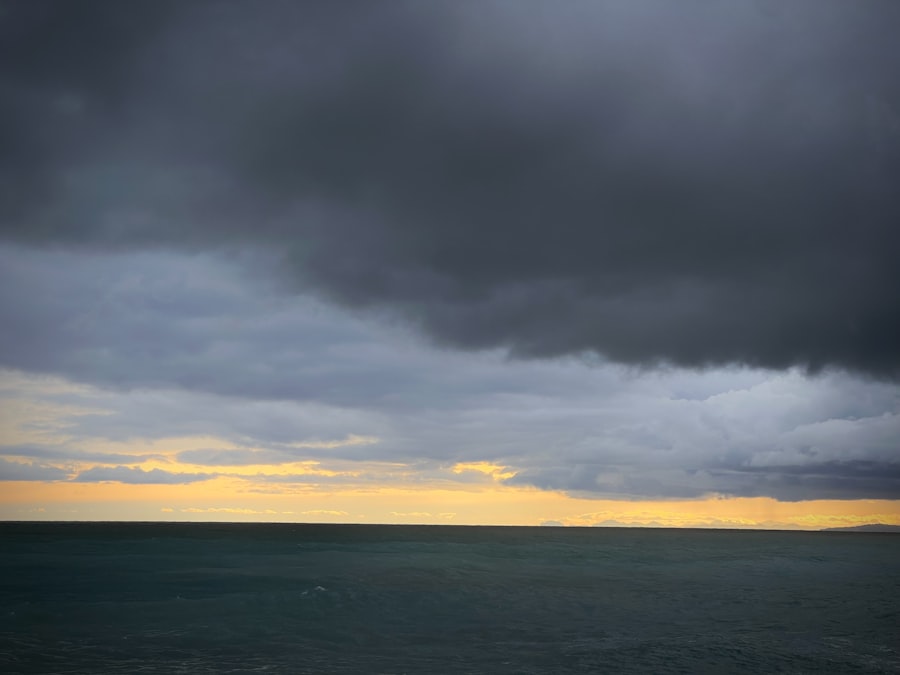
Belize's swap took effect on August 1, 2026, into what has been one of the quietest Atlantic hurricane seasons in years. Only three systems, Arthur, Bertha, and Cristobal, had earned names through late August, and Colorado State University's final seasonal outlook, published in early August, projected roughly 40% of a normal year's hurricane activity, with El Nino-driven wind shear cited as the main suppressing factor. NOAA's own outlook puts the odds of a below-normal season at 75%.
A quiet season is, if anything, the better time to lock in this kind of cover, before a named storm forces urgent, expensive terms. It is not a reason to assume the swap is unnecessary. The season runs through November 30, its trigger conditions apply across two full seasons, 2026 and 2027, and Belize took a direct hit from Hurricane Lisa as recently as 2022. A calm August says nothing about what October brings.
What This Means If You're Not a Finance Ministry
Most readers of this article will never sign a sovereign swap. What follows from one is narrower but still practical for a Belizean household, a small business anywhere in the Caribbean, or a broker advising either:
- Understand that sovereign cover and your own policy are separate systems. The swap protects the Government of Belize's balance sheet, funding public recovery spending. It does not pay your roof repair bill; a property or business policy from a licensed local insurer still has to do that.
- Ask what model prices your own policy, not just the government's. If a sovereign-level instrument can go to market without naming its catastrophe model, a household-level insurer is even less likely to volunteer the answer unless asked directly.
- Treat redundancy as the actual lesson here, not the dollar figure. Belize did not replace CCRIF with a swap; it stacked one on top of the other. The same logic applies to a household: a savings buffer, documented inventory, and an adequate sum insured all do different jobs, and none of them substitutes for the others.
- Use a quiet season for the paperwork, not for skipping it. Arthur, Bertha, and Cristobal have been mild. Belize's own trigger conditions run through 2027 regardless, and Hurricane Lisa in 2022 is a reminder of how fast a quiet stretch can end.
Frequently Asked Questions
What is Belize's new catastrophe swap and how does it work? +
Does this swap protect individual Belizean homeowners or businesses? +
Who pays for the swap, and what does it cost Belize? +
How is a catastrophe swap different from CCRIF's insurance or a catastrophe bond? +
What happens if a hurricane hits Belize but does not meet the swap's trigger? +
Does the swap disclose which catastrophe model sets its triggers? +
Could this catastrophe swap model spread to other Caribbean countries? +
What should an ordinary Belizean or Caribbean policyholder take from this deal? +
Twenty million dollars will not rebuild Belize City after a major hurricane, and nobody arranging this swap has claimed it would. What it does is add a fourth, faster-moving layer to a resilience stack that already included CCRIF, a contingent credit line, and debt-relief clauses, arranged by an institution that says this is the first of many such deals rather than a one-off. The part still missing is not capital. It is a public answer to the question of what, exactly, is deciding when that capital moves.
Caribbean Insurance is part of a wider Caribbean AI network tracking how artificial intelligence is reshaping the region's institutions, from insurance and disaster financing to education and governance. For related coverage and research, see StarApple AI, Adrian Dunkley, the Caribbean AI Association, the Caribbean AI Risk Management Council, and Jamaica AI.
Related Articles
Jamaica's $200M Catastrophe Bond Meets an AI Insurance Gap
A record bond, an AI-priced trigger, and a region where most fishers and farmers still have no cover at all.
CCRIF's Livelihood Protection Policy, Explained
The parametric product built specifically for fishers, farmers, and tourism workers.

A Quiet Season, Used to Teach Regulators AI
The Bahamas is training insurance regulators on AI models before the next Melissa arrives.